
Rajasthani dance is more than entertainment—it is a vibrant reflection of the state’s history, traditions, and desert lifestyle. Rooted in folk customs, these dances narrate stories of valor, devotion, love, and everyday life through graceful movements, colorful attire, and rhythmic music. For travelers exploring Rajasthan, witnessing these performances offers an authentic cultural connection that goes far beyond monuments and palaces.
Jaipur, the cultural heart of the state, is one of the best places to experience traditional Rajasthani dance in its purest form. From palace courtyards to village festivals, dance remains an integral part of celebrations, welcoming guests with warmth and rhythm.
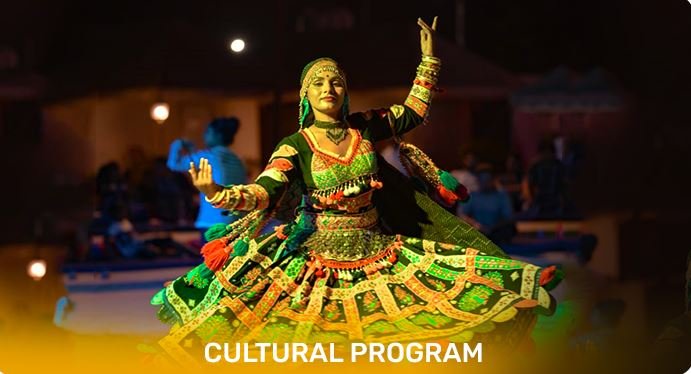
Popular Folk Dances of Rajasthan
Ghoomar
Ghoomar is the most iconic Rajasthani dance, traditionally performed by women during festivals, weddings, and special occasions. Dancers move gracefully in circular patterns, their flowing ghagras creating a mesmerizing visual. Originating from the Bhil community, Ghoomar later became a symbol of royal celebrations in Jaipur and other regions.
Kalbelia
Known for its energetic and fluid movements, Kalbelia dance is performed by the Kalbelia community, historically associated with snake charming. The dance mimics the movements of serpents, accompanied by traditional instruments like the been (pungi) and dholak. Recognized by UNESCO as an Intangible Cultural Heritage, Kalbelia is a must-see for culture lovers.
Bhavai
Bhavai is a stunning display of balance and skill, where women perform with multiple pots balanced on their heads, sometimes even dancing on glass or sharp surfaces. This dance represents strength, grace, and dedication, often performed during fairs and religious gatherings.
Chari Dance
Originating from the Kishangarh region near Jaipur, Chari dance symbolizes joy and prosperity. Women balance brass pots (charis) with lit lamps on their heads while dancing, creating a breathtaking sight, especially during evening performances.
Terah Taali
This devotional dance is performed by women sitting on the ground, with small metal cymbals (taalis) tied to different parts of their bodies. The rhythmic sound created by subtle movements forms the core of this spiritually rich performance.
Costumes, Music, and Instruments
Rajasthani dance is incomplete without its vibrant costumes and traditional music. Women wear colorful lehengas, odhnis, silver jewelry, and traditional bangles, while men often perform in dhotis and turbans. The music is powered by folk instruments such as dholak, nagada, sarangi, khartal, and algoza, creating an energetic and earthy rhythm that brings the dance to life.
Where to Experience Rajasthani Dance in Jaipur
Visitors can enjoy live folk dance performances at cultural villages, heritage hotels, evening shows, and festival events in Jaipur. Many travelers include these experiences as part of their Jaipur Tour Package, ensuring a memorable cultural evening alongside sightseeing.
Seasonal festivals like Teej, Gangaur, and the Jaipur Literature Festival also feature traditional dance performances, offering travelers a chance to witness authentic celebrations.
Why Rajasthani Dance Is a Must-See for Travelers
Rajasthani dance preserves centuries-old traditions passed down through generations. Watching these performances helps support local artists and keeps folk culture alive. For visitors exploring Jaipur and Rajasthan, it adds depth to the journey, transforming a simple trip into a culturally enriching experience.
Whether you’re visiting with family, friends, or as a couple, experiencing Rajasthani dance provides a glimpse into the soul of the desert state—colorful, rhythmic, and timeless.